by Helen Fox

Teaching Peace illustration courtesy johnworldpeace.com
Abstract: In-depth interviews with undergraduates at a high-ranking, politically liberal U.S. university suggest that young adults who are most likely to occupy future positions of influence are skeptical of the idea that a world without war is possible. Despite their aversion to war in general and the Iraq War (also called The Second Gulf War: 2003-2011) in particular, these students nearly always said they believe that war is an integral part of human nature and that peaceful international relations will always be subverted by individuals and/or groups that insist on taking advantage of others. When students defended the need for war, they did not cite international terrorism or self defense as just causes, but rather the responsibility to protect defenseless others such as villagers in Darfur or Jews in Hitler’s Germany. However, students knew little about the prevalence and efficacy of nonviolent movements or the range of diplomatic and political tactics that have been employed to deter violence. The author shares the content and methods of her seminar on nonviolence, and concludes that more courses in secondary schools and universities need to fill the gaps in students’ knowledge by teaching historical, social, political, and psychological information about both war and peaceful solutions to conflict.
Read the rest of this article »
by Brian Martin
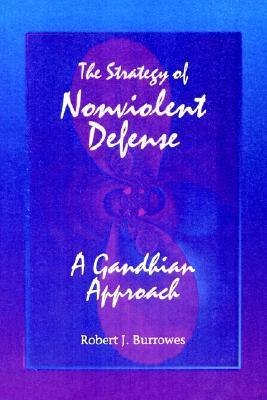
Dustwrapper art courtesy sunypress.edu
Military establishments spend a vast amount of effort preparing to resist or wage aggression. They have operational plans, for example to launch attacks on enemy troops or facilities. They make preparations to provide supplies of all sorts to their forces. They ensure that industry has the capacity to produce military and related goods. And they invest in powerful weapons systems to provide a technological edge. All this contributes to military strategy, commonly called “defence strategy.”
But defence can also be based on nonviolent means. Compared to military preparations and investments, the amount of effort devoted to nonviolent defence is almost nonexistent. There have been numerous nonviolent actions, to be sure, some of them quite spectacular, such as the Czechoslovak resistance to the 1968 Soviet invasion, the toppling of the Marcos dictatorship in the Philippines in 1986, the First Palestinian Intifada from 1987-1993 and the collapse of communist regimes in Eastern Europe in 1989. But these uses of nonviolence were largely spontaneous. Unlike military operations, most nonviolent action so far has involved relatively little planning of operations, logistics, social infrastructure and technology.
Perhaps this is only to be expected, given that the idea of nonviolent defence is fairly new. The first full-fledged expositions date from the late 1950s, and since then a small number of researchers have dealt with the topic. (1) But just as the practice of nonviolence receives little funding or support compared to the military, there have been few incentives for research into nonviolence, which has continued at a fairly low level.
Read the rest of this article »
by E. S. Reddy
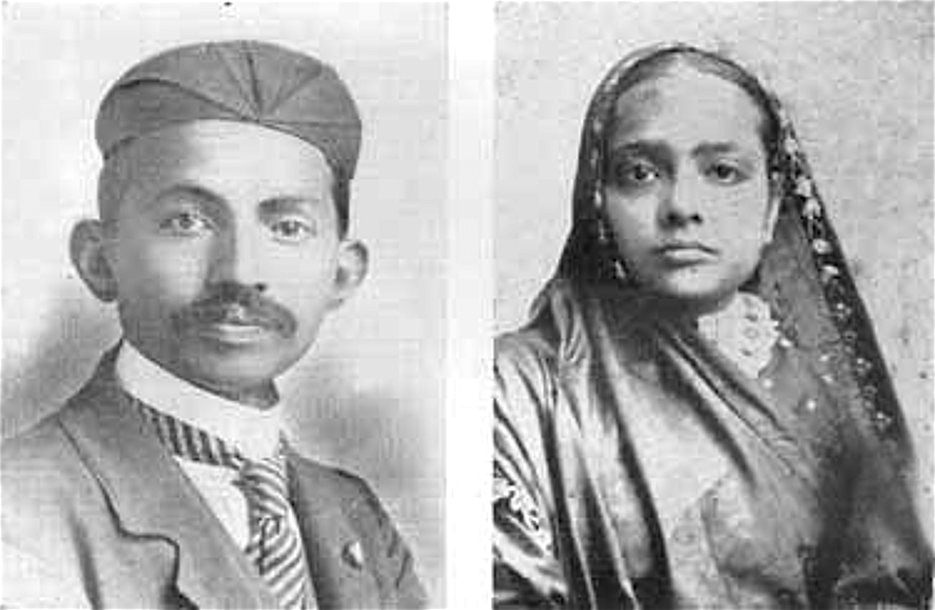
Portraits of Mohandas and Kasturba Gandhi at the time of the South African campaign; courtesy en.wikipedia.org
Editor’s Preface: We have posted several articles on significant figures in the Satyagraha movement, other than Mahatma Gandhi. We have also featured articles on women nonviolence leaders such as Vandana Shiva and Dorothy Day. This article concentrates on the role Gandhi’s wife, Kasturba Gandhi (1869–1944), played in the South African satyagraha campaign. Please also see the note at the end for biographical information about the author, and acknowledgments. JG
Kasturba Gandhi by her “silent suffering” as a prisoner sentenced in 1913 to three months rigorous imprisonment, made a crucial contribution to the success of the nonviolence civil resistance campaign (satyagraha) in South Africa, but this is little known.
In early 1913, when satyagraha in the Transvaal had been suspended, Justice Malcolm Searle of the Cape Supreme Court ruled that marriages performed according to a religion which allowed polygamy – that is, all Muslim and Hindu marriages – would not be recognised in South Africa. If this ruling had prevailed, almost all married Indian women would have been reduced legally to the status of concubines and their children treated as illegitimate. The women and children would have lost the right of inheritance and the right to enter South Africa. The government ignored repeated appeals from the community for legislation to remedy the situation.
Read the rest of this article »