by George Lakey

Banner art courtesy Peace & Justice Center; pjcvt.org
How do we figure out how to amplify our power and maximize the chance of winning victories? We can start by freeing up the energy devoted to one-off protests, rallies, and demonstrations. When I look back on the one-off protests I’ve joined over the years, I don’t remember a single one that changed anything. The really spectacular failure was the biggest protest in history, in February 2003. I joined millions of people around the world on the eve of George W. Bush’s war on Iraq. We did get a huge front-page headline in the New York Times, but Bush only needed to wait until we went home.
Read the rest of this article »
by Robert J. Burrowes

Poster art courtesy War Resisters League; warresisters.org
All nonviolent struggles are conducted simultaneously in the political and strategic spheres, and these spheres, which are distinct, interact throughout. I have discussed this at length elsewhere. (1) Despite this, only rarely have nonviolent struggles been conducted with a conscious awareness of this vitally important relationship. Gandhi’s campaigns were very effective partly because he understood the distinction and relationship between politics and strategy in nonviolent struggle. And the failure of many campaigns can be attributed, in part, to the fact that most activists do not. To illustrate the distinction and the relationship between these two spheres, and to highlight their vital importance, this article discusses them within the simpler context of nonviolent actions.
Read the rest of this article »
by Jim Haber
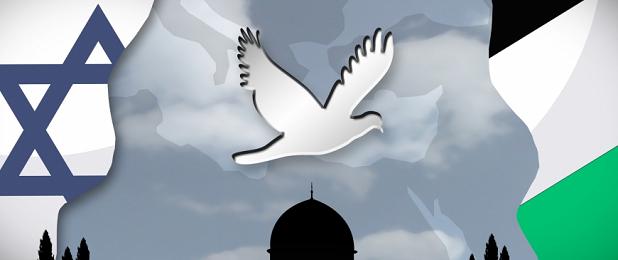
Israel-Palestine peace poster, courtesy Centre for European Reform; cer.eu
A new project in the rural hills of the West Bank, called Sumud Freedom Camp, is the latest sign of a resurgence of strategic, nonviolent organizing in Palestine; it is creating strong bonds between Palestinians and Jewish activists from Israel and around the world.
I traveled to Palestine this May (2017) with a delegation organized by the Center for Jewish Nonviolence (CJNV), to help build the Sumud Camp (the name means steadfastness), following a call for assistance by Palestinian communities. Using the hashtag #WeAreSumud, the camp was organized by a unique coalition of Palestinians, Israelis, non-Israeli Jews, and international justice seekers standing in solidarity with the village of Sarura, in the South Hebron Hills of the occupied West Bank.
Read the rest of this article »
by George Lakey
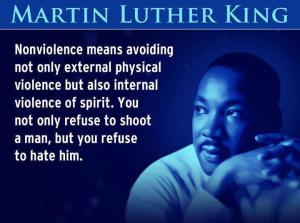
Martin Luther King poster courtesy fabiusmaximus.com
Some people feel inspired by Martin Luther King, Jr. to do service projects. But the U.S. civil rights movement that he led was not about days of service; it was about days of confrontational action. Think about the hundreds of action groups that sprang up in the North as well as the South, many winning campaigns against racial discrimination. They mobilized and radicalized people; that movement gave me my first experience of civil disobedience.
Some of those early groups, of course, flourished, and some fell apart quickly. Since then we’ve learned a lot about how to start action groups in a way that increases their chance to thrive, wage a campaign, learn from it and grow, often through trial and error.
The steps for beginning a group are not really as simple as a food recipe, but I’ll take the risk of writing this in a recipe-kind-of-way. Remember that every situation is always unique. You’ll need to think with friends through each step, adapting to your circumstances.
Read the rest of this article »