Archive for August 2014

“There is no such thing as Gandhism.”

by M. K. Gandhi

Editor’s Preface: In our continuing series on original texts, we are posting here Gandhi’s little known rejection of “Gandhism”. The editorial notes at the end give textual and other details. JG

Poster art courtesy Elevate to Great; e-2-g.com

There is no such thing as Gandhism, and I do not want to leave any sect after me. I do not claim to have originated any new principle or doctrine. I have simply tried in my own way to apply the eternal truths to our daily life and problems. There is therefore no question of my leaving any code behind like the code of Manu [an ancient Hindu Lawgiver]. There cannot be any comparison between that lawgiver and me. The opinions I have formed and the conclusions I have arrived at are not by any means final. I may change them tomorrow if I find better ones.

I have nothing new to teach the world. Truth and nonviolence are as old as the hills. All I have done is to try experiments in both, on as vast a scale and as best as I could. In doing so I have sometimes erred and learnt by my errors. Life and its problems have thus become to me a series of experiments in the practice of truth and nonviolence. By instinct I have been truthful, but not necessarily nonviolent. As a Jain Muni [Jain holy man] once rightly said, I was not so much a votary of Ahimsa as I was of Truth, and that I put the latter in the first place and the former in the second. For, as he phrased it, I was capable of sacrificing nonviolence for the sake of truth. In fact, it was in the course of my pursuit of Truth that I discovered Nonviolence. Our scriptures have declared that there is no Dharma [law] higher than truth. But nonviolence they say is the highest duty. The word Dharma, in my opinion, has a different connotation as used in the two aphorisms.

Read the rest of this article »

The World Significance of Mahatma Gandhi

by Rev. Dr. John Haynes Holmes

Editor’s Preface: This is the text of a sermon John Haynes Holmes preached to his congregation at the Community Church, New York City in March 1922. It was published in pamphlet form in April of that year, and is one of the earliest extant US statements about the significance of Gandhi, although Haynes also mentions a previous sermon to his congregation some months before, which could not be retrieved. This continues our series of postings of original, historical documents. See the notes at the end for further textual and biographical information. JG

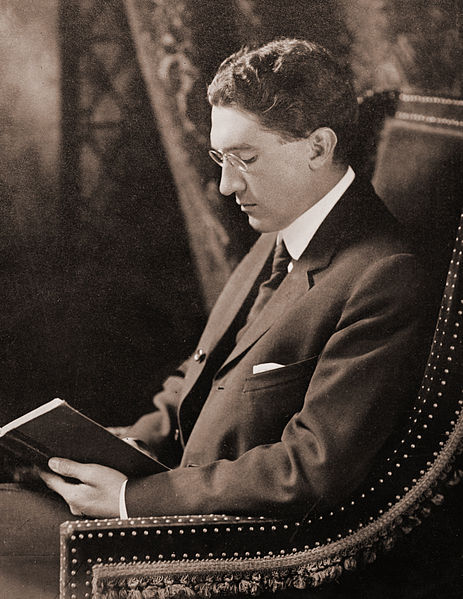
Portrait of John Haynes Holmes, courtesy of commons.wikimedia.org

As I enter this morning upon the discussion of Mahatma Gandhi, of India, and of the universal significance of the work which he is doing in his native country, I am irresistibly reminded of the day, which was not so long ago, when I first had the pleasure of presenting this man to this congregation, and of declaring my conviction, the same now as it was then, that Gandhi is incomparably the greatest man now living in the world. How the situation has changed in these few months! At that time Gandhi’s name was practically unknown outside the borders of India. I hit upon it by the merest chance; and, although I came to feel upon the instant that here was a creative spiritual genius of the first order, my information was of the meagrest description. Furthermore, all endeavors to get additional information met with failure.

Today, however, Gandhi’s name is appearing on the first pages of all the newspapers. Scores of articles have been published in the magazines and reviews of this country, England and the continent. A great journal, the New York World, sends its leading correspondent to India to “spy out the land,” and he returns to write of Gandhi and his policy of nonviolence and non-cooperation. From almost utter obscurity, this man mounts in a few months to a fame as universal as it promises to be immortal. He holds today the center of the world’s attention. That position of primacy held so proudly by Woodrow Wilson in 1918 and 1919, and by Vladimir Lenin in 1920 and 1921, is now occupied by a little Oriental who has never held any official position, who seeks neither glory nor power, and who languishes this day behind the bars of an English jail.

Read the rest of this article »

Gandhi’s Impact on the USA Peace Movement

by Charles C. Walker

Logo of UK-FOR; courtesy of for.org.uk

Gandhi’s influence on the peace movement  in the United States was felt as early as the 1920s. An effective exponent of Gandhi’s ideas was John Haynes Holmes, a prominent Unitarian minister and reformer, and an outspoken pacifist in World War I. He first set forth his discovery of Gandhi in a 1922 sermon titled “World Significance of Mahatma Gandhi” which was widely circulated. In another sermon the same year, “Who is the Greatest Man in the World Today?” this designation of Gandhi amazed many listeners, most of whom had never heard the name before. Gandhi’s autobiography was first published in America in the magazine Unity, which Holmes edited.

There were landmark books: by Romain Rolland in 1924, and three by C.F. Andrews published in 1930 and 1931. The Power of Nonviolence by Richard B. Gregg first appeared in 1934, and two revised editions were subsequently published. Probably no other book on nonviolence has been so widely read by U.S. pacifists, or so widely used as the basis for a study program.

Read the rest of this article »

The Basic Principles of Satyagraha

by Ravindra Varma

Satyagraha logo courtesy ahopefortoday.com

The first half of the 20th century witnessed a series of spectacular and thrilling nonviolent struggles led by Gandhi.  These struggles demonstrated the power of nonviolent action. Gandhi overcame scepticism and ridicule, and established the efficacy, viability and superiority of nonviolent methods of action. He made people aware of the power that lay latent within them. He applied and experimented with nonviolence on an unprecedented scale involving millions of people, inspiring them to embark on militant and revolutionary actions for a host of issues.

Read the rest of this article »

Gandhi’s Constructive Program: A New Society in the Shell of the Old

Earth Charter logo courtesy earthcharterinaction.org

by Joanne Sheehan

Gandhi called for complete independence by truthful and nonviolent means. He counseled that social change requires building the new society in the shell of the old, which he termed the constructive program. The nonviolence movement in the West has not emphasized this goal for the most part. In the United States, we mostly focus on political action, in particular on protest and civil disobedience. We do little organizing around what Gandhi thought was one of the most powerful political actions: non-cooperation with power, “not against men but against measures.” As Robert Burrowes explains in The Strategy of Nonviolent Defense: A Gandhian Approach (Albany, New York: SUNY Press, 1995), “Nonviolence for Gandhi was more than just a technique of struggle or a strategy for resisting military aggression. It was intimately related to the wider struggle for social justice, economic self-reliance, and ecological harmony as well as the quest for self-realization.”

Read the rest of this article »

They Refused To Let Justice Be Crucified

by Terry Messman

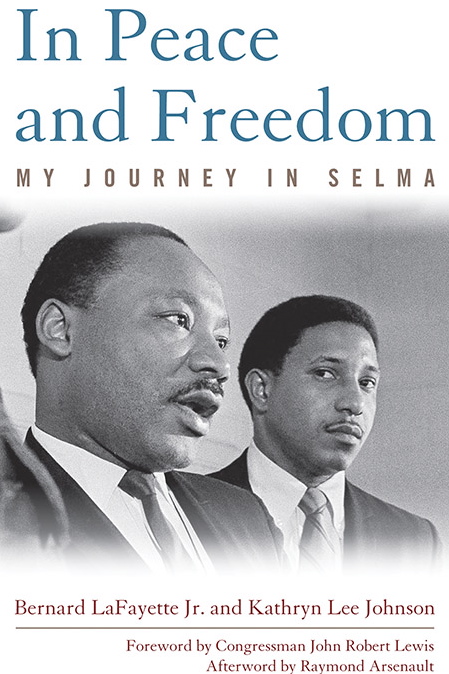
Dust wrapper courtesy Univ. Press of Kentucky

During their hard-fought struggle to overcome nearly impossible odds and win voting rights for African American citizens who had been disenfranchised for 100 years, civil rights activists marched down the long and treacherous road that led from the brutal battlefield of Selma, Alabama, through a seemingly endless gauntlet of beatings, bombings, bloodshed, gunshots, martyrdom, and a tri-state assassination conspiracy.

Even though their nonviolent efforts to win the right to vote were met with some of the most shocking violence of the civil rights era, the Freedom Movement stood its ground and claimed perhaps its most significant and far-reaching victory for human rights — the Voting Rights Act of 1965.

As a young man, Bernard LaFayette was chosen to become the key organizer of this dangerous and bloody struggle, and he offers a fascinating insider’s look into the Selma campaign in interviews and in his recent book, In Peace and Freedom, My Journey in Selma. The lessons in community organizing, in this highly insightful case study, are deeply valuable and relevant to today’s human rights activists.

Find the Cost of Freedom

In opening up this chapter of the Freedom Movement to reveal its lessons, it is important to approach it, not as some academic case study in nonviolence, but with the clear-eyed realization of the terrible price that was paid in bloodshed and the loss of life. LaFayette has given us something far more profound than just another case study of nonviolence. He has also opened our eyes to the heartbreaking sacrifices made by decent and compassionate people such as Jimmie Lee Jackson, Viola Liuzzo and Rev. James Reeb, who selflessly gave their very lives in their commitment to fighting for the most basic of human rights.

Read the rest of this article »


hrule
“When planted in the garden, the mustard seed, smallest of all the seeds, became a large tree, and birds came and made their home there.” Luke 13:19

“For me whatever is in the atoms and molecules is in the universe. I believe in the saying that what is in the microcosm of one’s self is reflected in the macrocosm.” M. Gandhi