by A. S. Sasikala
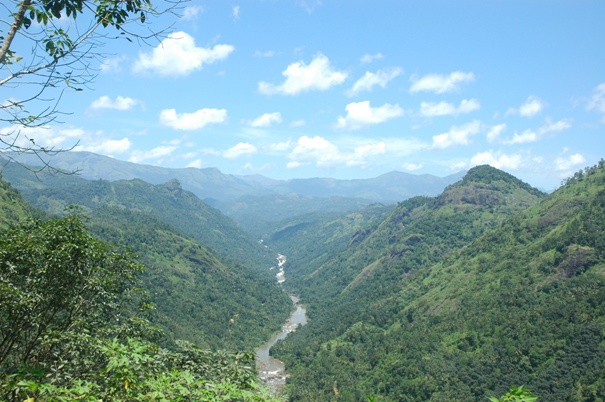
Silent Valley rainforest; photographer unknown; courtesy paradise-kerala.com
Environmental concerns were not much considered at the time of Gandhi, but his ideas on village decentralisation and national unity such as Swaraj, Swadeshi, Sarvodya, and especially the Constructive Programme makes him an advocate of environmentalism. He is generally considered to have had deep ecological views and his ideas have been widely used by different streams of environmentalism such as Green parties and the deep ecology movement founded by Arne Naess. The eminent environmental thinker Ramachandra Guha identified three distinct strands in Indian environmentalism, crusading Gandhians, ecological Marxists, and appropriate technologists, these last being advocates of small-scale, environmentally sound technology, most often known as “intermediate technology”. Guha observed that, unlike the third, the first two rely heavily on Gandhi, but Indian ecological Marxists also used Gandhian strategies and tactics. The Silent Valley Movement in Kerala, south India, is a case in point of just how ecological Marxists were willing to use Gandhian techniques in order to fight against environmental injustice. The role of the Marxist KSSP, Kerala Sastra Sahitya Parishad (translated as Kerala Science Literature Movement, and also referred to as Kerala People’s Science Movement, PSM) illustrates their various strategies. Methodologies adopted throughout the movement were inspired by Gandhian methods, as previously used by other environmental movements like Chipko [see Mark Shepard’s article here].
Read the rest of this article »
by A. S. Sasikala
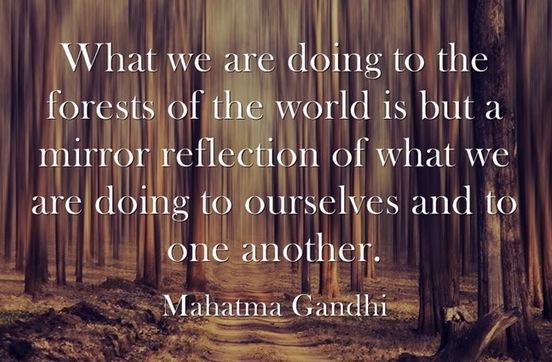
Poster courtesy greenpeace.org; artist unknown
We live in a world in which science, technology and development play important roles in changing human destiny. However, the overexploitation of natural resources for the purpose of development leads to serious environmental hazards. In fact, the idea of development is itself controversial, as in the name of development we are unethically plundering natural resources. It is rather common to encounter high dam controversies, water disputes, protests against deforestation, and against pollution. Eminent Indian environmental activist Vandana Shiva argues that development is actually a continuation of colonialism. Borrowing from Gustavo Esteva she argues that, “development is a permanent war waged by its promoters and suffered by its victims.” (1)
It is true that a science that does not respect nature’s needs, and a development that does not respect people’s needs threatens human survival. The green thoughts of Gandhi give us a new vision to harmonise nature with the needs of people.
Read the rest of this article »
by Ken Butigan
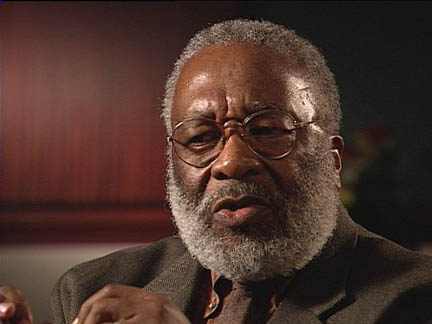
Vincent Harding, c. 2013; photographer unknown.
Historian by profession and relentless nonviolent advocate by calling, Vincent Gordon Harding died on Monday, May 19, at the age of 83. The author of a series of books on the civil rights movement — which he called the Southern Freedom movement — he not only wrote history, but also played an active part in the struggle to make and remake it.
Harding worked with the Student Nonviolent Coordinating Committee, the Southern Christian Leadership Conference, and the Mennonite House in Atlanta, an interracial voluntary service. As part of the Albany, Ga., movement, he was arrested for leading a demonstration at the city hall in 1962. He became a strategist for the movement, and drafted Martin Luther King’s historic 1967 anti-war speech “Beyond Vietnam,” which King delivered at Riverside Church in New York City one year to the day before his assassination.
Read the rest of this article »
by Pace e Bene

Peace flag by and courtesy of paceebene.org
Editor’s Preface: This continues our series of purpose statements by our nonviolent movement groups. We have already posted those by the Metta Center for Nonviolence, and the Gandhi Information Center in Berlin. Our own purpose is to build an archive of record on the history and culture of nonviolence. Please consult the Editor’s Note at the end for further information and links. JG
Transforming Power
Creative Nonviolence transforms our lives and our world by unleashing our capacity for connection, compassion, and cooperation. It can help us discover: nonviolent options in the face of the conflicts and challenges we deal with every day; tools for nurturing peaceful relationships and tapping healing power in our lives, and ways to mend the broken circles in our communities and in our larger world.
Through this organized love creative nonviolence can:
- Break the cycle of violence
- Free ourselves and others from destructive fear
- Struggle actively for change
- Create a more even playing field
- Celebrate differences while affirming the interdependence of all beings
- Discover constructive and sustainable ways of life
Read the rest of this article »
by Orient BlackSwan
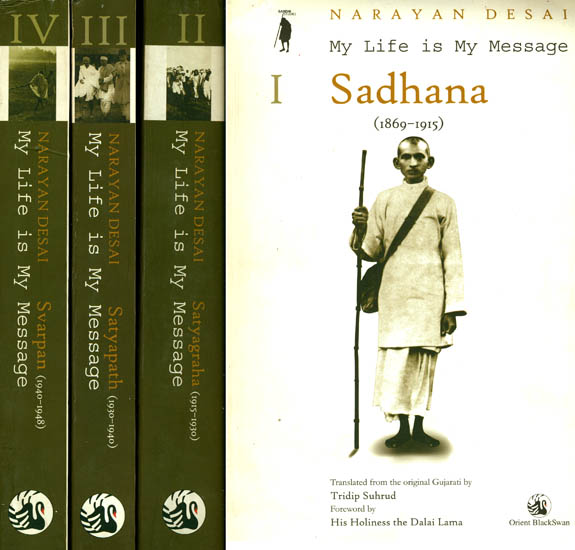
Cover art courtesy orientblackswan.com
Editor’s Preface: Narayan Desai (b. 1924) was the son of Gandhi’s personal secretary and closest advisor, Mahadev Desai. Raised and educated at Gandhi’s ashrams, Sabarmati and Sevagram, he has remained committed to the Gandhian movement and to Gandhian principles his entire life. After marrying he joined Vinoba Bhave’s community and later became a leading figure in the Shanti Sena, Peace Army. He founded Peace Brigades International, and was also chairman of War Resisters International. This four-volume biography of Gandhi, written in Gujarati, has long been considered a staple of Gandhian research and this first English translation is a welcome addition to the literature. The text that follows is the publisher’s description of My Life is My Message (tr. Tridip Suhrud), 4 vols., Gandhi Studies (New Delhi: Orient Blackswan, 2009). Please consult the Editor’s Note at the end of the article for further information. JG
Most biographies of Mahatma Gandhi tell the story of a great political leader who led India to freedom. But for Gandhi, his politics was a part of his spiritual quest. Swaraj means self-rule and not merely political autonomy; Gandhi’s struggles were meant to aid the quest for individual self-perfection. Everything he did—the Dandi salt march or his fasts for self-purification—was part of this struggle for self-realisation.
Read the rest of this article »