
Archive for June 2014

Arne Naess and Gandhi

by Thomas Weber
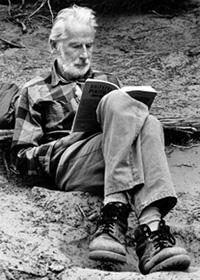
Arne Naess c. 2005; courtesy deepecology.org

The important philosopher of deep ecology and Gandhian philosophy, Arne Naess, died in January 2009. (1) Not one Australian newspaper or media outlet referred to this event. The news did not even make it into the obituary columns of such global weeklies as Time magazine (although, as usual, many sporting and film personalities did). Naess’s life was a significant one, and his philosophy still is. While environmentalists may know something about Naess’s thought, they tend to know little of its Gandhian antecedents. Those interested in Gandhian philosophy generally tend not to know of Naess’s contribution, but should. In short, Arne Naess should be remembered and his work examined.

A Personal Background

During 1996, as a Gandhi researcher and teacher of peace studies, I spent a few weeks as a visiting fellow at the Oslo Peace Research Institute. While in the city, I had decided to look up Arne Naess. I knew that in Norway he was an icon and that probably he had more environmentalists beating a path to his door than he needed. I, however, wanted to visit him because he had written one of the best (but least known) analyses of Gandhian nonviolence available in English – Gandhi and Group Conflict: An Exploration of Satyagraha. (2)

As a Gandhi scholar, I knew the Gandhi literature reasonably well and was often amazed to see learned articles on Gandhian philosophy that overlooked his book completely. Of course, this is the result of coming from a small out of the way country and having your landmark tome published by the Norwegian University Press. When I called on him, he was polite but seemed a little world-weary until I told him that I wanted to talk about the Mahatma because of his major contribution to Gandhi scholarship.
Read the rest of this article »

Observations on Contemporary Indian Views of Gandhi

by Thomas Weber

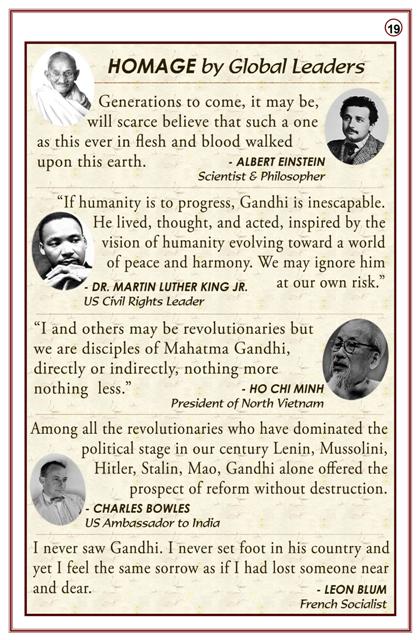
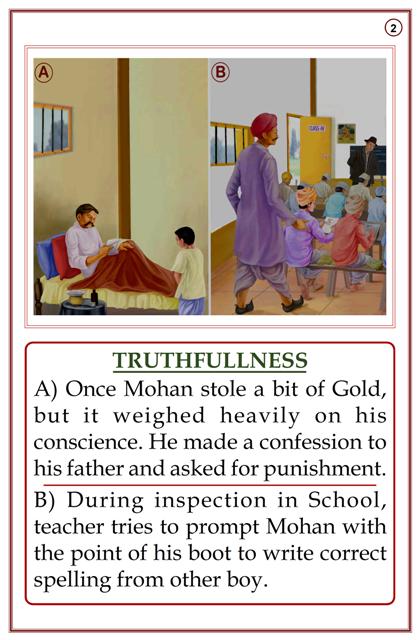
Poster art courtesy mkgandhi.org

I first went to India in 1975 as a young person with a strong interest in the country and its most famous son. I returned in 1979 specifically to find Gandhi and have been back on Gandhi quests about a dozen times since. I have now spent something over three years of my life there, much of it at Gandhi ashrams or in the Gandhi archives of various libraries, or talking to old Gandhians, many of whom I had the privilege of calling friend before they passed away. Hopefully this gives me some small claim to make comments on the status of what may be termed “Gandhism” in India. And, as an outsider, I have no political axes to grind or profit to make from taking any particular stand.

At about the time that I was preparing to return to India in July 2013, I saw a notice for the setting up of yet another Gandhi research centre in India, this time at relatively out of the way Jalgaon. My immediate reaction was: isn’t this great, there must be a lot of interest in Gandhi. But then a question also came to my mind: How many such institutions of good quality can India accommodate? With the opening of yet another research centre, my mind has been playing with the thoughts of what all these centres mean. What is the quality of the research that comes out of them? Do they indicate a genuine resurgence in Gandhi scholarship or are they merely a sign that various universities or those high up in the Gandhian firmament had their own personal needs that have to be filled? That they cannot be seen to be lagging behind the competition? Are we trying to compensate for disappearing Gandhians by endowing Gandhi institutions? And are these institutions lulling us into feelings about the health of Gandhism in the country while Gandhian activists fade away with us hardly noticing?

Read the rest of this article »

Satyagraha and Interpersonal Conflict Resolution

by Thomas Weber

Cartoon poster courtesy mkgandhi.org

Satyagraha, as used in interpersonal conflicts, often depends on the degree to which its values have been internalised rather than on a conscious adoption of tactics. Gandhi claimed that “there is no royal road” to achieve this. It will only be possible “through living the creed in your life which must be a living sermon”. This “presupposes great study, tremendous perseverance, and thorough cleansing of one’s self of all impurities”, which in turn requires working through “a wide and varied experience of interior conflict”. These interior conflicts, for example the questioning of one’s own motives and prejudices, the sincere attempt to see if in fact the other’s position is nearer the truth, and if need be admitting one’s errors, are in some measure alternatives to wider conflicts.

The critics of nonviolence often attack the pacifist approach or justify not trying nonviolent solutions by posing the hypothetical case in which the satyagrahi is either himself attacked, or is witness to an attack upon another. It is unlikely that such an eventuality will occur in the lifetime of average individuals;  most human conflicts take place in quite different circumstances. Lanza del Vasto, therefore, warns against using such “extreme, exceptional, and overpowering” imaginary circumstances for formulating general rules or drawing conclusions from them concerning legitimacy of action. The striving for nonviolence, instead of planning for such possible eventualities, accepts that if they did occur they would be still taken care of somehow (just as if they had been planned for), while during the rest of one’s life, other, almost daily conflicts could be solved in more cooperative ways.

Read the rest of this article »

Telling the Truth about War: The Street Spirit Interview with Kathy Kelly

by Terry Messman

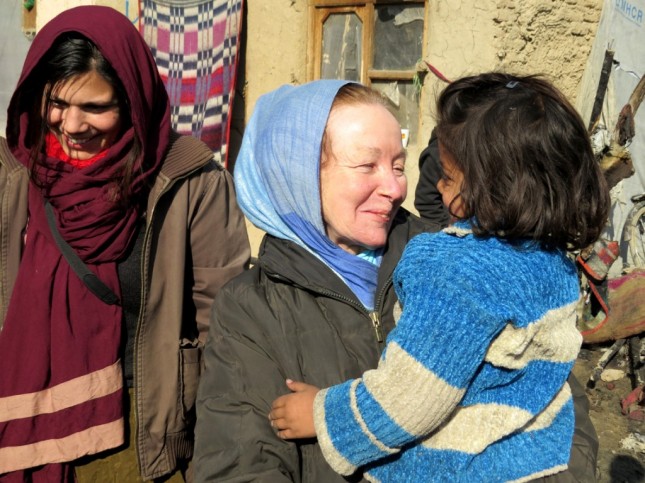
Kelly with Afghan peace volunteers; photographer unknown; courtesy thestreetspirit.org

The people that threaten us are in the corporations and the well-appointed salons,
and they really threaten us. They make alcohol, firearms and tobacco,
and arms for the military.They steal from us, and they rob us. And who goes to jail?
A woman who can’t get an economic stake in her community
.” Kathy Kelly

 Street Spirit: You just returned from Afghanistan last month where you were living with the Afghan Peace Volunteers. Many people, even in activist circles, are no longer focusing on that war-torn nation. Why does Afghanistan remain such a critical focus of your work?

Kathy Kelly: I have a friend, Milan Rai, who had coordinated Voices in the Wilderness in the U.K. and is now the editor of Peace News. Mil once said, “One of the ways to stop the next war is to continue to tell the truth about this war.”

So how do we tell the truth about our wars? I think if the U.S. public understood the choices that are being made in their name — and if the public understood those choices outside the filter of the forces that are marketing those wars — eventually there might be a hope of non-cooperation with wars.

So Afghanistan is still very, very important in terms of the choices confronting the people of the United States. But also, just on the purely ethical matter of not turning away from people who are dying, we owe reparations to the people of Afghanistan for the suffering that has been caused.

Read the rest of this article »

Kathy Kelly: Seeking Peace in a World of Imprisoned Beauty

by Terry Messman

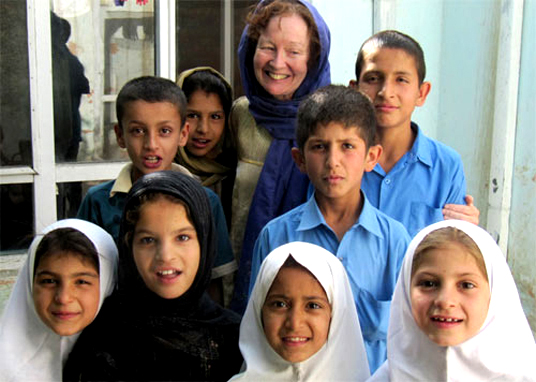
Kelly with Afghan children; photographer unknown; courtesy thestreetspirit.org

Kathy Kelly’s vision of a world of imprisoned beauty reveals the countless lives caged behind bars, cast off into refugee camps, banished in homeless shelters, or left to die on remote battlefields.

While serving nine months in federal prison after her arrest for an anti-nuclear protest where she planted corn on top of a nuclear missile silo in Missouri, peace activist Kathy Kelly had a vivid awakening that she was living in “a world of imprisoned beauty.”

In prison, Kelly met women who were captives in this world of imprisoned beauty, women who could just as easily have been her sisters-in-law or her next-door neighbors. To this day, she cites the courage of the women she met in prison as a guiding light in her work for peace and justice.

Read the rest of this article »

“Hug the Trees!” Chandi Prasad Bhatt, Gaura Devi, and the Chipko Movement

by Mark Shepard

Earth provides enough to satisfy every man’s need, but not every man’s greed.
M. K. Gandhi

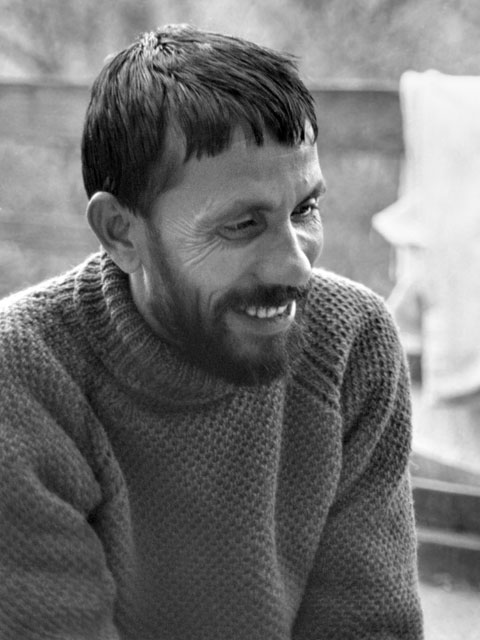
Chandi Prasad, 1978; photo by Mark Shepard

At the time of my India visit, I knew next to nothing about the rapid destruction of forests in Third World countries, or about its costs in terms of firewood shortage, soil erosion, weather shifts, and famine. Still, I was at once intrigued when I heard about the Chipko Movement, mountain villagers stopping lumber companies from clear-cutting mountain slopes by issuing a call to “hug the trees.”

So, one fall morning in 1978. along with a Gandhian friend, a young engineer, I found myself on the bus out of Rishikesh, following the river Ganges toward its source. Before long we had left the crowded plains behind and were climbing into the Himalayas. Thick forest covered the mountain slopes, interrupted only occasionally by terraced fields reaching dramatically up the mountainsides. Our bus bumped along a winding road halfway between the river below and the peaks above, as it followed the river’s meandering around the sides of mountains.

Read the rest of this article »

Soldiers of Peace: Narayan Desai and Shanti Sena, the “Peace Army”

by Mark Shepard

We are constantly being astonished at the amazing discoveries in the field of violence.
But I maintain that far more undreamt-of and seemingly impossible discoveries
will be made in the field of nonviolence.

M. K. Gandhi

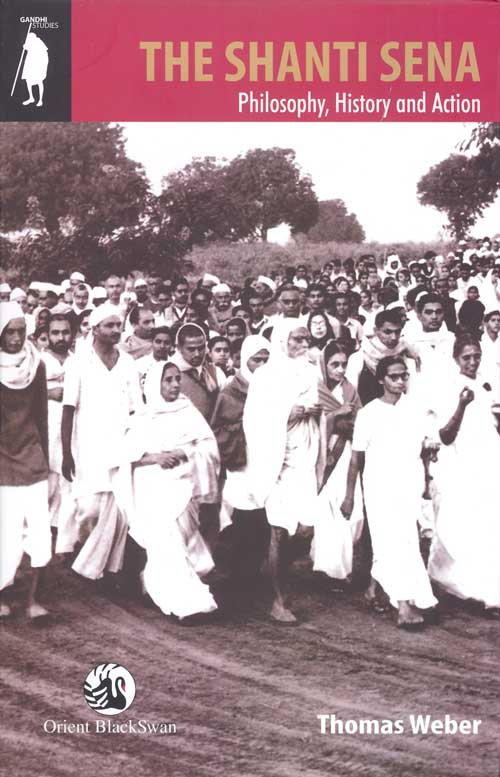
Cover art courtesy gandhistudies.blogspot.nl

The first time I heard of Shanti Sena” was in 1978, at an international gathering of activists in India. The speaker was Narayan Desai, and his topic, Shanti Sena, the Gandhian “Peace Army.”

“The time was during World War II, when Japan was advancing on India. I was lying in my room one night, and my parents thought I was asleep. But I was just pretending to sleep, because, like all children in the world, I wanted to listen to my parents. So they were talking about me—which made me even more interested. The topic was this: that afternoon, Gandhi had said that if he had an army of nonviolent soldiers, he would like to defend the country nonviolently by standing before the advancing Japanese troops. And so these two members of Gandhi’s ashram were trying to decide which of them should join this army. Since they had an adolescent child, namely me, they were thinking that one of them should stay behind. That way, at least one parent would survive. My mother was saying, ‘He is nearly grown now, and you can probably look after him better. Let me join.’ But my father was saying, ‘Even if I remain behind, I might not have time to look after him. So I should join.’ That was the kind of tussle going on. But in the end, they decided they would both join. They would leave their child in the hands of God.”

Narayan is the son of Gandhi’s chief secretary, Mahadev Desai. At the time of this talk he was already a top leader of India’s Gandhians and best known as a long-time head of Shanti Sena. Today he directs his Institute for Total Revolution, a training center for nonviolent activists, and is known world-wide for leadership roles in War Resisters International and Peace Brigades International—an organization that Shanti Sena largely inspired.

Read the rest of this article »


hrule
“When planted in the garden, the mustard seed, smallest of all the seeds, became a large tree, and birds came and made their home there.” Luke 13:19

“For me whatever is in the atoms and molecules is in the universe. I believe in the saying that what is in the microcosm of one’s self is reflected in the macrocosm.” M. Gandhi