by Narayan Desai
Editor’s Preface: Narayan Desai (b. 1924) is the son of Mahadev Desai, Gandhi’s chief secretary until 1942. He is the founder of the nonviolence training center, the Institute for Total Revolution, and the author of a four volume biography of Gandhi among other works. He has been awarded both the Jamnalal Bajaj Award and the UNESCO Madanjeet Singh Prize for his work in nonviolence and pacifism. JG
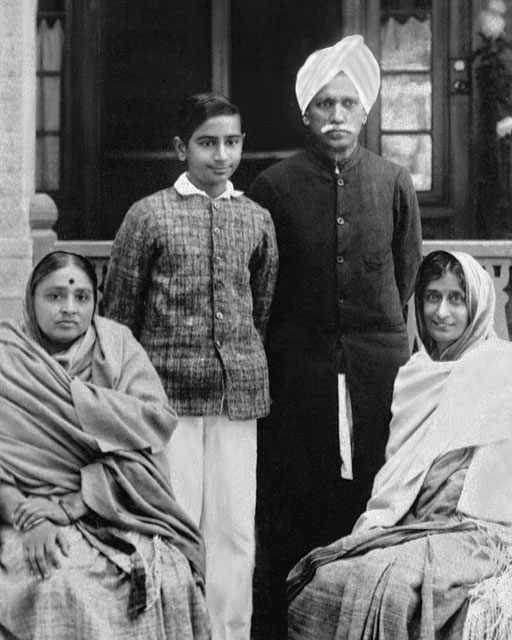
Young Narayan Desai with parents; photo courtesy Narayan Desai
The Satyagraha Ashram of Mahatma Gandhi stood on the bank of the broad Sabarmati River, across from the city of Ahmedabad. “This is a good spot for my ashram,” Bapu used to say. All of us in the ashram called him Bapu, or Father. He added, “On one side is the cremation ground. On the other is the prison. The people in my ashram should have no fear of death, nor should they be strangers to imprisonment.” Indeed, my earliest memories of Bapu are intertwined with those of Sabarmati Prison. Bapu would go for a walk each morning and evening. He would put his hands on the shoulders of those to either side. These companions would be his “walking sticks.” We children were always given first choice for this job. Whether his human walking sticks were really any help to him, perhaps only Bapu could say. But as for us, being chosen always made us swell with pride. In fact, in our eagerness to be chosen Bapu’s “sticks”, we would sometimes clash.
Read the rest of this article »
by Bashar Humeid
Editor’s Preface: The Syrian philosopher and theologian Jawdat Said (b. 1931) is one of the most important theorists of Islamic nonviolence. There is an English language website devoted to his life and work, and also posts an English translation of his Nonviolence: the Basis of Settling Disputes in Islam that you may download for free. JG
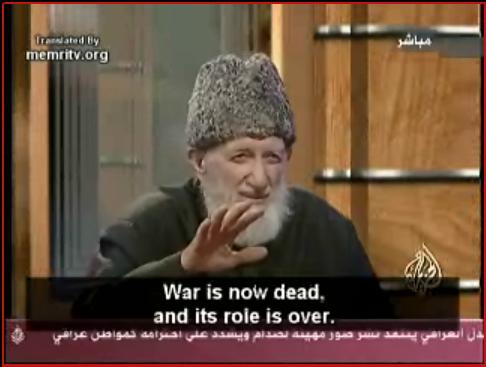
Al Jazeera screen capture; courtesy of jawdatsaid.net/en/
Jawdat Said’s book The Doctrine of the First Son of Adam: The Problem of Violence in the Islamic World (1966) was the first publication in the modern Islamic movement to present a concept of nonviolence. Now in its fifth edition, the book is still in print. Said was born in Syria in 1931, but moved to Egypt at a young age to study Arabic language at Azhar University in Cairo. While there, he took an active part in the cultural life of Egypt, and was also closely connected to the Islamic movement of that period. Even back then, Said was already warning about the negative effects of the violence being carried out by the Islamic movement in Egypt. He wrote his book as a direct response to the writings of Sayyid Qutb, who died in 1966 and is considered the father of militant Islam. (1)
Other intellectuals of the Islamic world also disagreed with Qutb, including Hasan al-Hudaybi, the leader of the Egyptian Muslim Brotherhood. (2) In the early 1980s, the Muslim Brotherhood in Syria began – in spite of Said’s warnings – to rebel against the government of Hafez al-Assad. (3) However, the revolt was put down with much bloodshed, and ended in 1982 with a massacre in the city of Hama. Following this defeat, the Syrian movement began seriously entertaining the idea of demilitarization, and the writings of Jawdat Said became increasingly influential in Islamic activist circles.
Read the rest of this article »
by Ogyen Thinley Dorje, His Holiness the 17th Karmapa
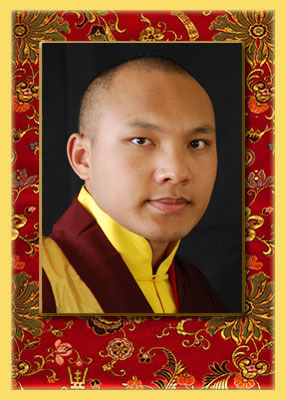
Ogyen Thinley Dorje; photographer unknown; courtesy of Karma Triyana Dharmachakra
Ever since the human race first appeared on this earth, we have used this earth heavily. It is said that 99% of our resources come from the natural environment. We are using the earth up. The earth has given us immeasurable benefit, but what have we done for the earth in return? We always ask for something from the earth, but never give her anything back. We never have loving or protective thoughts for the earth. Whenever trees or anything else emerge from the ground, we cut them down. If there is a bit of level earth, we fight over it. To this day we perpetuate a continuous cycle of war and conflict over it. In fact, we have not done much of anything for the earth. Now the time has come when the earth is scowling at us; the time has come when the earth is giving up on us. The earth is about to treat us badly and give up on us. If she gives up on us, where can we live? There is talk of going to other planets that could support life, but only a few rich people could go. What would happen to all of us sentient beings who could not go?
What should we do now that the situation has become so critical? The sentient beings living on the earth and the elements of the natural world need to join their hands together—the earth must not give up on sentient beings, and sentient beings must not give up on the earth. Each needs to grasp the other’s hand. So doesn’t the Monlam logo look like two hands clasping each other?

Dream Flag design; courtesy of khoryug.com
Its shape is similar to the design of the Sixteenth Gyalwang Karmapa’s Dream Flag, of peace and serenity, which is used regularly among the Karma Kamtsang tradition. If I were to make up everything myself, I doubt it would have any blessings, but using the previous Karmapa’s design as a model probably gives this logo blessings. This is a symbol of our Kagyu Monlam that we hold for the benefit of the entire world. We will not give up on the earth! May there be peace on earth! May the earth be sustained for many thousands of years! These are the prayers we make at the Kagyu Monlam, which is why this symbol is the logo of the Monlam. (1) I think it also might become a symbol of people having affection for the earth and wanting to protect it.
Read the rest of this article »
by Bharat Mansata
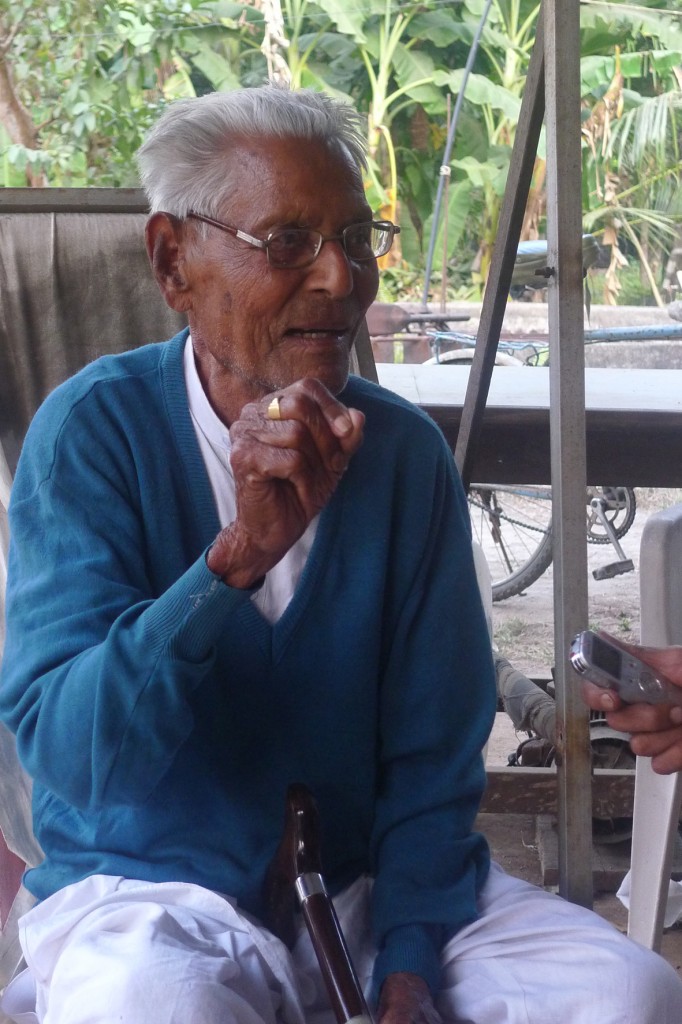
Bhaskar Save on 92nd birthday; photograph by the author
Bhaskar Save, acclaimed “the Gandhi of Natural Farming”, turned 92 on 27 January 2014, having inspired and mentored three generations of organic farmers. Masanobu Fukuoka, the legendary Japanese natural farmer, visited Save’s farm in 1996, and described it as “the best in the world”, ahead of his own farm. In 2010, the International Federation of Organic Agriculture Movements (IFOAM) honoured Save with the “One World Award for Lifetime Achievement”.
Indeed, Save’s farm is a veritable food forest; a net supplier of water, energy and fertility to the local eco-system, instead of a net consumer. His way of farming and his teachings are rooted in a deep understanding of the symbiotic relationships in nature, which he is ever happy to explain in simple, down-to-earth idioms to anyone interested. Save’s 14 acre orchard-farm Kalpavruksha is located on the Coastal Highway near village Dehri, District Valsad, in southernmost coastal Gujarat, a few km north of the Maharashtra-Gujarat border. The nearest railway station is Umergam on the Mumbai-Ahmedabad route.
Read the rest of this article »
by Robert Ellsberg
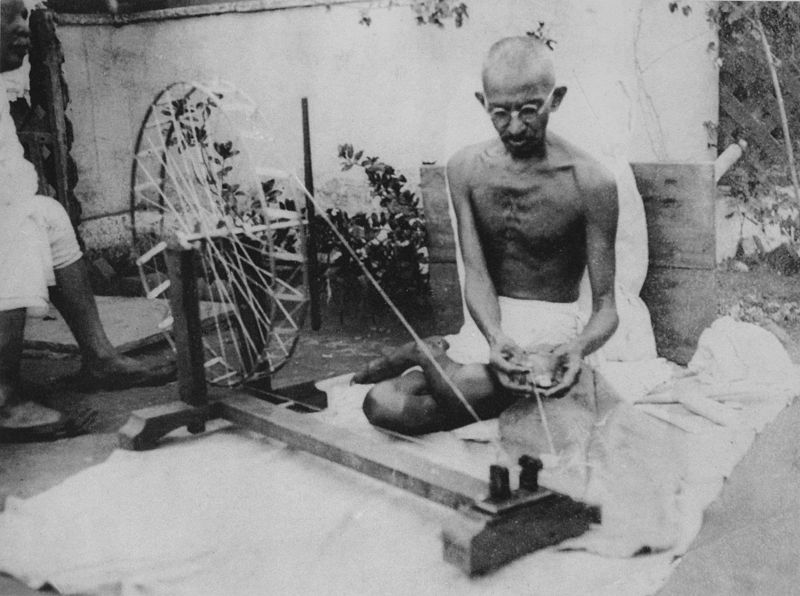
Gandhi spinning, c. 1945; photographer unknown; courtesy of wikipedia.org
“The outward freedom that we shall attain will only be in exact proportion to the inward freedom to which we have grown at a given moment. And if this is the correct view of freedom our chief energy must be concentrated upon achieving reform from within.” M. K. Gandhi
Thomas Merton observed that Gandhi’s spirit of nonviolence “sprang from an inner realization of spiritual unity in himself. The whole Gandhian concept of nonviolent action and satyagraha is incomprehensible if it is thought to be a means of achieving unity rather than as the fruit of inner unity already achieved.” Satyagraha in its sense of truth-force, or soul-force as Martin Luther King called it, could not be a means for overcoming division, unless it represented in itself the active experience of the unity of life; it could not secure a peace from without that was anything but the gift of its own being, a love rooted beneath the surface of things. For the satyagrahi each battle must first be fought in the soul—the battle against selfishness, attachment, passion. One could hardly begin the outer struggle—to wean the opponent from his or her selfishness, attachment, and passion, until the inner battle had been fought, and Truth had been victorious. The task was merely to re-enact that struggle on a larger stage. Truth never engaged in a struggle that had not already been won.
Read the rest of this article »
by Robert Ellsberg
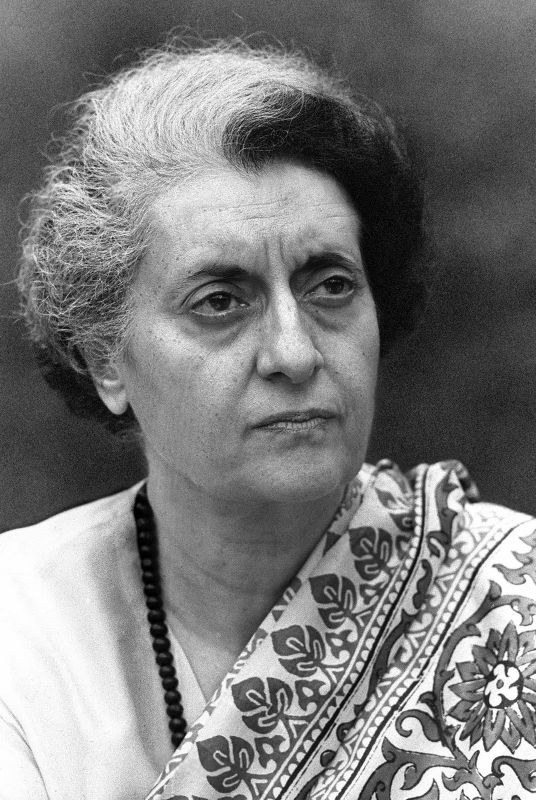
Indira Gandhi, c. 1965; photographer unknown; courtesy of bollyworldbits.blogspot.nl
The Indian consulate in New York City occupies a stately building off of Fifth Avenue. I was arrested for distributing leaflets marking the first anniversary of Indira Gandhi’s State of Emergency. I was charged with disorderly conduct and obstruction of government administration. “Which government might that be?” I asked hopefully. “Whose jail are you in, buddy?” replied my arresting officer.
At that time, in India, tens of thousands of men and women were in jails and detention camps, among them the most active segments of the nonviolent Gandhian movement, for having committed crimes not much different than my own.
And now, more than two years later, the dark days in India, which began on June 26, 1975, have passed. In the spring of 1976, Mrs. Gandhi gave six-weeks notice that free elections would be held, scheduled for mid-March. The announcement itself came as no surprise; Indira’s power was confidently entrenched, most of the provisions of emergency rule (which was maintained throughout the election) were long since codified in law, or established in fearful precedent. It was obvious that elections under these conditions would accomplish no more than to legitimize and cement the existing constitutional dictatorship.
Read the rest of this article »