Archive for May 2013

Nonviolent Social Movements: The Street Spirit Interview with Stephen Zunes
by Terry Messman

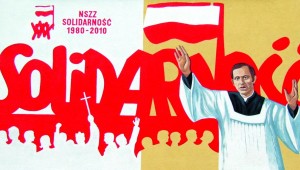
Polish mural commemorating 30 years of the Solidarity Movement; Father Jerzy Popieluszko foreground; artist unknown.

In Bolivia in 1979, when there was a coup by a general named Natusch Busch, the whole country went on strike and 600,000 people massed in the Bolivian capital of La Paz, which was bigger than the total population of the city at the time. Trade union leaders and others walked into the president’s house, walked into his office, and they asked him, “What’s your program?” He looked at them, and then he looked at the 600,000 people out in the streets, and he said, ‘Yours!’” Stephen Zunes

Street Spirit: In your book, Nonviolent Social Movements: A Geographical Perspective, you and your co-authors described how nonviolent movements all over the world have undermined powerful systems of oppression through the mass withdrawal of cooperation. How can such a seemingly passive act as non-cooperation overcome a military dictatorship?

Stephen Zunes: Well, basically, for the state to operate, it needs people to carry out its orders — ranging from the security forces, to government bureaucrats, to sympathetic people in the media, to academics, and to many other people that may, in normal times, do the duty of the state, but can be convinced to be on the side of the people.

This is striking. I was in Bolivia a few years ago where they have had a long history of nonviolent resistance against right-wing dictatorships and neo-liberalism and all sorts of injustices. And it was amazing when I talked to everyone from illiterate peasants, to intellectuals, to people in the government, to urban workers — they’ll all tell you that the most powerful person in Bolivia is not the president or any elected officials, but the head of the trade union federation. Why? Because the unions can shut down the entire country.

So if there’s a general strike or other forms of mass resistance, it doesn’t matter if the government occupies various government offices, and has a monopoly of weapons, or, in some cases, a monopoly of media. If people refuse to obey their orders, then they don’t have any power.
Read the rest of this article »

Stephen Zunes On A Power That Can Overthrow Dictatorships

by Terry Messman

Nonviolent movements have toppled dictators all over the globe, in Mali, Serbia, Poland, Bolivia, the Philippines, East Germany, Latin America, and Africa. During the Arab Spring, it became clear that the power of nonviolence to overthrow tyrannical governments is giving new hope — and new revolutionary strategies — to people around the world. Just as several unexpected and massive nonviolent uprisings have dealt serious blows to brutal regimes around the globe, several scholars and researchers have dealt equally serious blows to generations of military analysts and national-security studies.

In a pioneering effort to systematically compare success rates of violent and nonviolent social-change movements, Erica Chenoweth and Maria J. Stephan, authors of Why Civil Resistance Works: The Strategic Logic of Nonviolent Conflict, researched 323 social-change campaigns from 1900 to 2006. Their electrifying finding was that campaigns of nonviolent resistance are nearly twice as likely to succeed as violent uprisings.

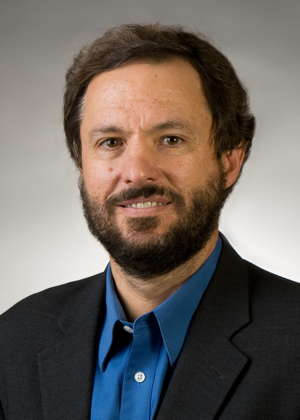
Stephen Zunes c. 2012; photographer unknown

Their innovative research may have proven astonishing in the circles of international security and military analysts, but it was solid confirmation of the lifelong research into nonviolent resistance carried out by Stephen Zunes, an author and Professor of Politics and International Studies at the University of San Francisco. Zunes’s parents were active in the peace movement. His father was an Episcopal priest and his parents were involved, along with many Quaker peace groups, in challenging U.S. militarism. He grew up in a Christian milieu where there was a strong sense of individual commitment to peace and social justice. He then attended Quaker schools and later worked with a number of Quaker peace groups, including the Friends Peace Committee and the American Friends Service Committee. Yet, his scholarly research, writing and teaching about the history of nonviolent movements was sparked, in part, by his realization that the strategies and tactics of nonviolent resistance not only had value for principled pacifists, but also could be utilized as a pragmatic — and highly effective — approach to social change by people from all walks of life, no matter their ideology or belief system.

In an interview with Street Spirit, Zunes said, “In terms of nonviolence, I realized one can’t build a movement just by calling on people to embrace pacifism. But if people recognize the utilitarian advantages of nonviolent action, it would help build the kind of movement that could create real change. So, academically, I got very interested in studying the phenomenon of strategic nonviolent actions.”

Read the rest of this article »

Bart de Ligt (1883-1938): Non-Violent Anarcho-Pacifist

by Peter van den Dungen

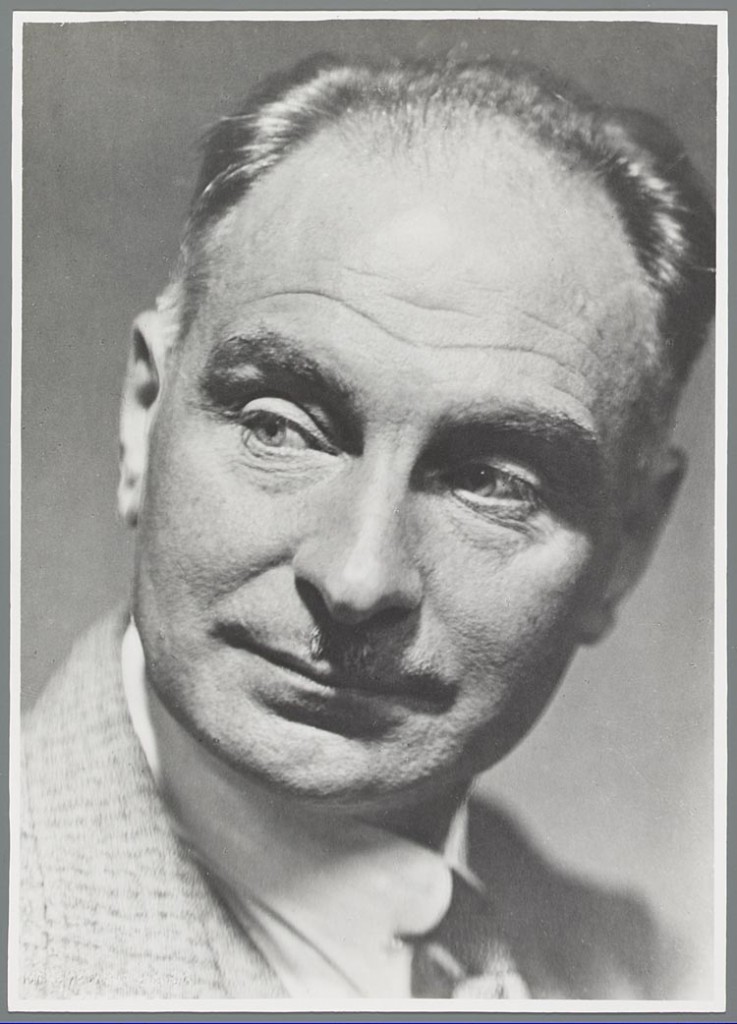
Bart de Ligt c. 1935; Public domain image; photographer unknown; courtesy of International Institute for Social History.

On 3 September 1938, within a year of the publication of The Conquest of Violence (his only book translated into English), Bart de Ligt collapsed and died in the railway station at Nantes. He had been taken ill in Bretagne and was on his way home to Geneva. Only 55, he had led such an intensively active public life, fully dedicated to the struggle for a better society, that this time his exhaustion proved to be fatal. His wife, who was his close collaborator, said that his life was like a flame, which had been extinguished too soon. But it had been a brilliant flame which had illuminated the thoughts, warmed the feelings, and lit or fanned the fervour of all those who had the good fortune to come into contact with him either directly through his countless public lectures, speeches and organisational activities, or indirectly through his equally numerous publications. It may be regarded as symbolic that he died in Nantes, the city where Henry IV signed the Edict granting freedom of conscience and worship to the French Protestants (who had been killed in their thousands in the St Bartholomew’s Day Massacre of 1572 and afterwards), for de Ligt was a fighter of all dogma, whether religious or secular, and a fearless defender of all those who, in the past as in his own day, were branded heretics. Being a chief among them, he conducted his own kind of inquisition which was one relentless exposition of, and opposition to attitudes, practices and institutions which resulted in the enslavement of the individual and the establishment of a society which was far from truly human.

Who was this iconoclast who likeminded contemporaries regarded as a ‘superior spirit’ and an ‘exceptional figure’ in Dutch intellectual life? The relatively few people, then as now, in Holland and abroad, who know and admire de Ligt’s social philosophy and social action – against war and all the things which make for war – saw him as a figure bearing comparison with Erasmus, whom he resembled in several ways, and whose biography, published in Dutch in 1936, was his last book.

Read the rest of this article »

The Effectiveness of Non-Violent Struggle

by Bart de Ligt

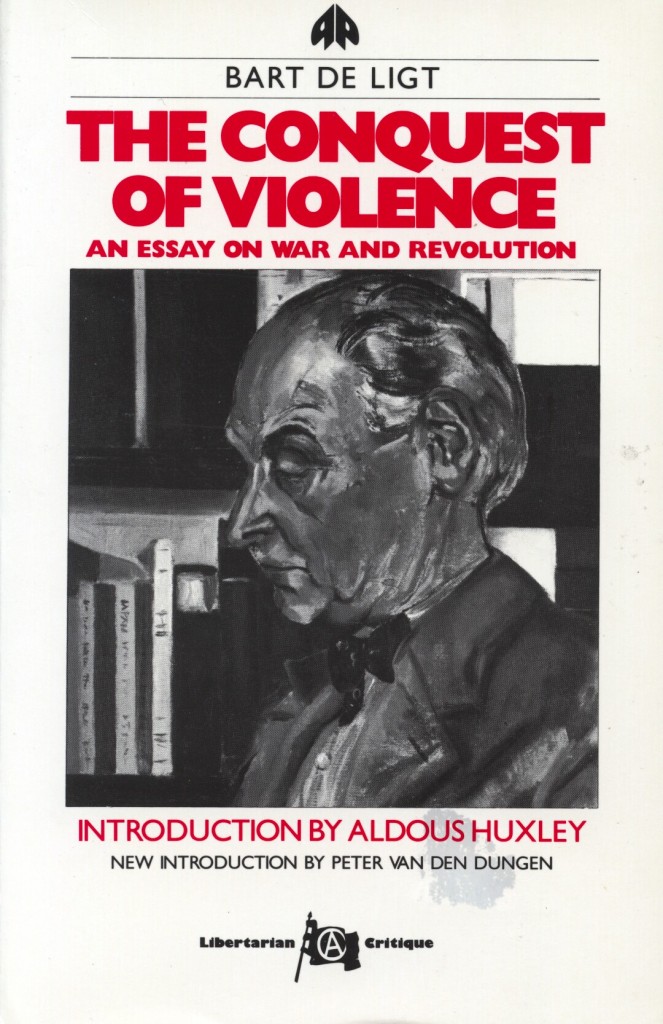
We would do well to situate in an historical context not only this far-ranging essay by the Dutch anarcho-pacifist Bart de Ligt (1883-1938) but Gandhi’s writings as well. It is easy to lose sight of the international foment at the time of Gandhi’s nonviolent campaigns in South Africa and India, and to disregard the intensity of the contemporary discourse on peace and war in Europe and the United States. By the mid 1930s when de Ligt published this essay in his book The Conquest of Violence, a devastating World War I had ended only a few years before; the rise of Nazism alarmingly threatened the outbreak of another. The debate over militarism versus Gandhian nonviolence has here the air of a struggle for survival and informs de Ligt’s essay with a sense of passion and urgency. It goes a long way to explain why he is so comprehensive in mentioning the views of thinkers whose philosophies were compatible with aspects of nonviolent resistance. The nonviolent boycott and labor strike were well-established methods that might be used in the service of peace. De Ligt knew that Gandhi did not conceive of Satyagraha in a vacuum, nor was it ever isolated on some higher plane from contemporary life. Satyagraha was ever at the heart of historical engagement, a life force that might be marshaled against the force of war.

Pluto Press edition; illustration by Ingrid van Peski-de Ligt; courtesy of J. E. de Ligt.

Concerning his Satyagraha campaign in South Africa, Mohandas Gandhi wrote,  “Non-violence is the law of our species as violence is the law of the brute. The spirit lies dormant in the brute and he knows no law but that of physical might. The dignity of man requires obedience to a higher law—to the strength of the spirit.”

How much more noble non-violent methods of struggle are than violent, and how much more effective, when they are well prepared!

Despite the justice of its cause, the religious fanaticism of its people, its famous marksmen, and a strategic geographical position the Transvaal was unable to hold out against the brutality of British imperialism. In the Transvaal in the early 1900s there lived a group of Hindu immigrants subject to harsh and special laws, which shackled them socially and economically and were profoundly offensive to their human dignity. Indian coolies were employed in the mines of Natal and elsewhere in South Africa, and they were tied to their work by five-year contracts. As a rule, they were very industrious. A great number of Indians, once their contracts had expired, stayed behind in the country as small farmers or tradesmen. By 1900 there were 12,500 Indians in the Transvaal.  Although they had occupied the country by violence, the white people began to look on these peaceable rivals as undesirable intruders.

Read the rest of this article »


hrule
“When planted in the garden, the mustard seed, smallest of all the seeds, became a large tree, and birds came and made their home there.” Luke 13:19

“For me whatever is in the atoms and molecules is in the universe. I believe in the saying that what is in the microcosm of one’s self is reflected in the macrocosm.” M. Gandhi